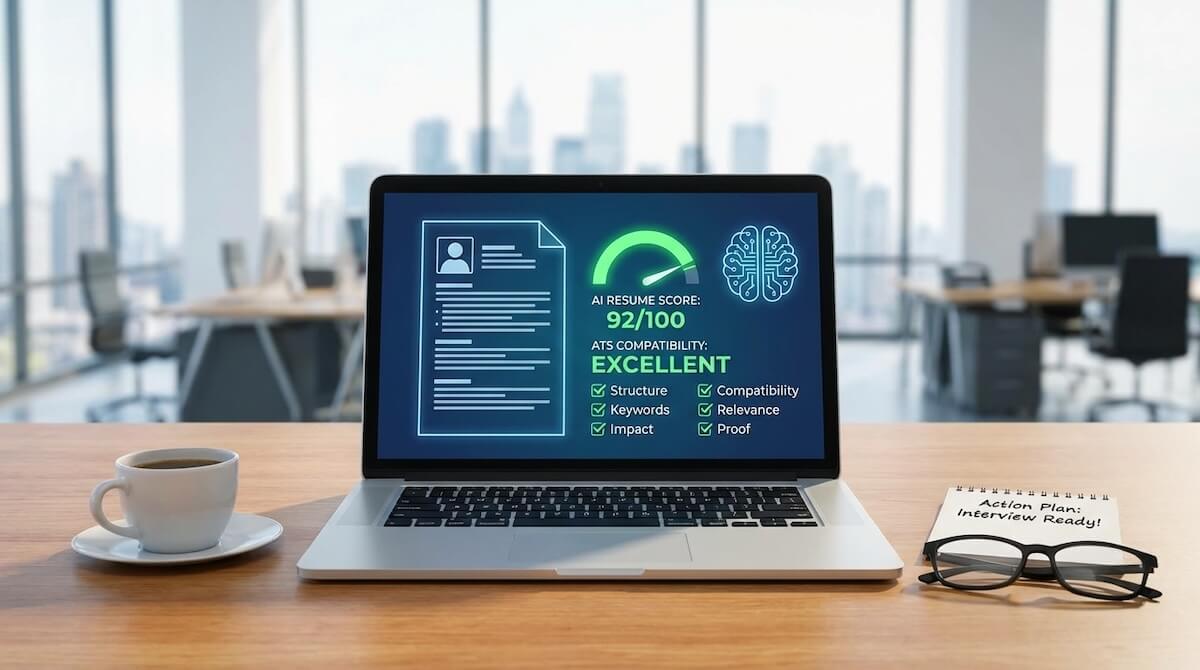
Free AI Resume Rater: Score Your Resume in 2 Minutes
If you searched for “rate my resume,” you are already doing the right thing. Most resumes fail not because the candidate is unqualified, but because the resume is hard to scan, weak on evidence, or missing key terms from the target job.
This guide gives you a fast, practical way to score your resume and improve it before you apply.
What a resume score actually measures
A strong resume score combines two things:
- ATS compatibility: Can applicant tracking systems parse your document correctly?
- Recruiter clarity: Can a human reviewer see your value quickly?
If you only optimize for one side, your results are limited. You need both technical compatibility and clear messaging.
For a deeper ATS breakdown, read our ATS score guide. If you want a weighted scoring method you can reuse across applications, use this free resume grader rubric.
Free resume rating rubric (0-100)
Use this rubric to grade your resume in 5 categories.
| Category | What to check | Weight |
|---|---|---|
| Structure and formatting | Clear sections, readable fonts, no tables/graphics that break parsing | 20 |
| Keyword alignment | Skills and terms from the job description appear naturally | 25 |
| Impact and results | Bullet points show outcomes, not only responsibilities | 25 |
| Relevance and focus | Content is targeted to one role, with minimal filler | 15 |
| Proof and credibility | Metrics, tools, certifications, and concrete examples | 15 |
Scoring bands
- 90-100: Interview ready, minor polish only
- 75-89: Strong, but still leaving opportunities on the table
- 60-74: Competitive in some roles, likely filtered out in others
- Below 60: Needs major revision before applying
Why resumes usually score low
1. Bullets describe tasks instead of outcomes
Weak:
- “Responsible for managing social media accounts.”
Strong:
- “Grew qualified inbound leads by 28% in 4 months by redesigning paid and organic social campaigns.”
2. Resume is generic across many roles
If your resume is trying to fit every job, it will not fit any specific one well. Tailor your summary, skills, and top bullets to a single target role.
3. Missing keywords from the job description
Compare your resume to 2-3 target postings and identify repeated terms (tools, frameworks, certifications, responsibilities). Add relevant terms naturally where you have real experience.
4. Formatting breaks ATS parsing
Avoid multi-column layouts, text in images, and unusual icons for section labels. Keep structure clean and predictable.
How to improve your score in 30 minutes
- Pick one target role and paste its job description into a notes doc.
- Highlight repeated skill and responsibility phrases.
- Rewrite your top 5 bullets to include outcomes and metrics.
- Move the most relevant experience higher in each section.
- Run a quick AI review, apply edits, and re-check your score.
Use AI to validate before you apply
After your manual edits, use a free AI checker to confirm:
- ATS readability
- keyword coverage
- weak or vague bullet points
- missing high-value sections
Start here: free AI resume review
If you want a side-by-side comparison of review approaches, see free vs AI resume review.
FAQ
What is a good resume score?
For most job seekers, 75+ is a solid baseline. For competitive roles, aim for 85+ with strong role alignment and quantifiable results.
Is an AI resume rater accurate?
AI is very good at structural and keyword diagnostics. It is less reliable for career storytelling or hiring-context nuance, so combine AI feedback with human judgment.
Should I tailor my resume for every application?
For high-priority roles, yes. Even light tailoring can improve keyword alignment and increase interview odds.
How often should I re-score my resume?
Re-score after any major update, role change, or when applying to a different job family. If response rates drop, run another review before sending more applications.
Related resources
View all Feb 25, 2026
Free Resume Grader: Score Your Resume and Improve It Fast
Use this free resume grader framework to score your resume, spot weak bullets, improve ATS compatibility, and increase interview callbacks.
Feb 16, 2026
50 AI Prompts for Your Resume: The Ultimate Guide to Standing Out
Copy-paste 50 expert AI prompts to optimize your resume for ATS, tailor it to any job description, and impress hiring managers.
Feb 1, 2026
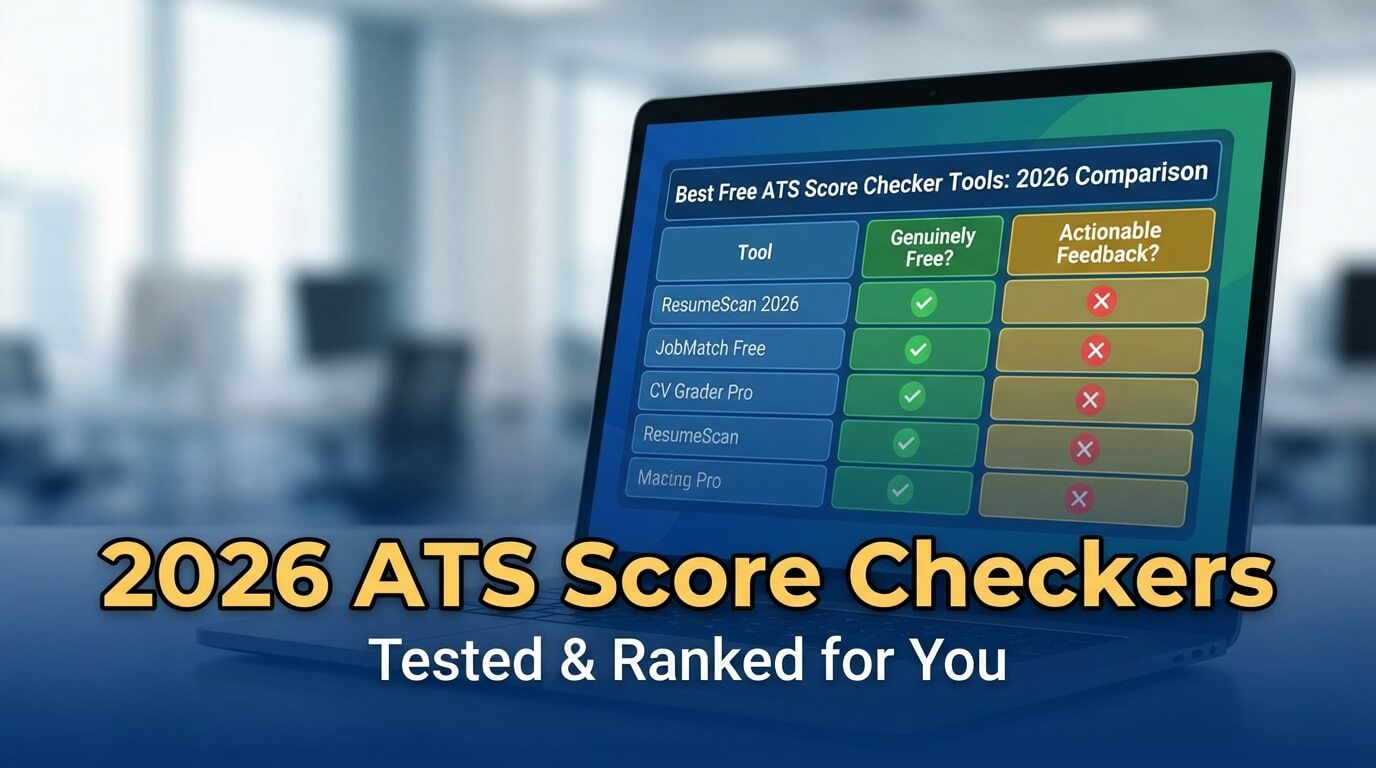
Best Free ATS Score Checker Tools: 2026 Comparison (Tested & Ranked)
Compare the best free ATS score checker tools for 2026. Find out which tools are truly free and which ones actually help your resume.